


Parkinson's Resources
Parkinson’s & Yoga Therapy
A supportive, adaptable approach to movement, breath, balance, and connection
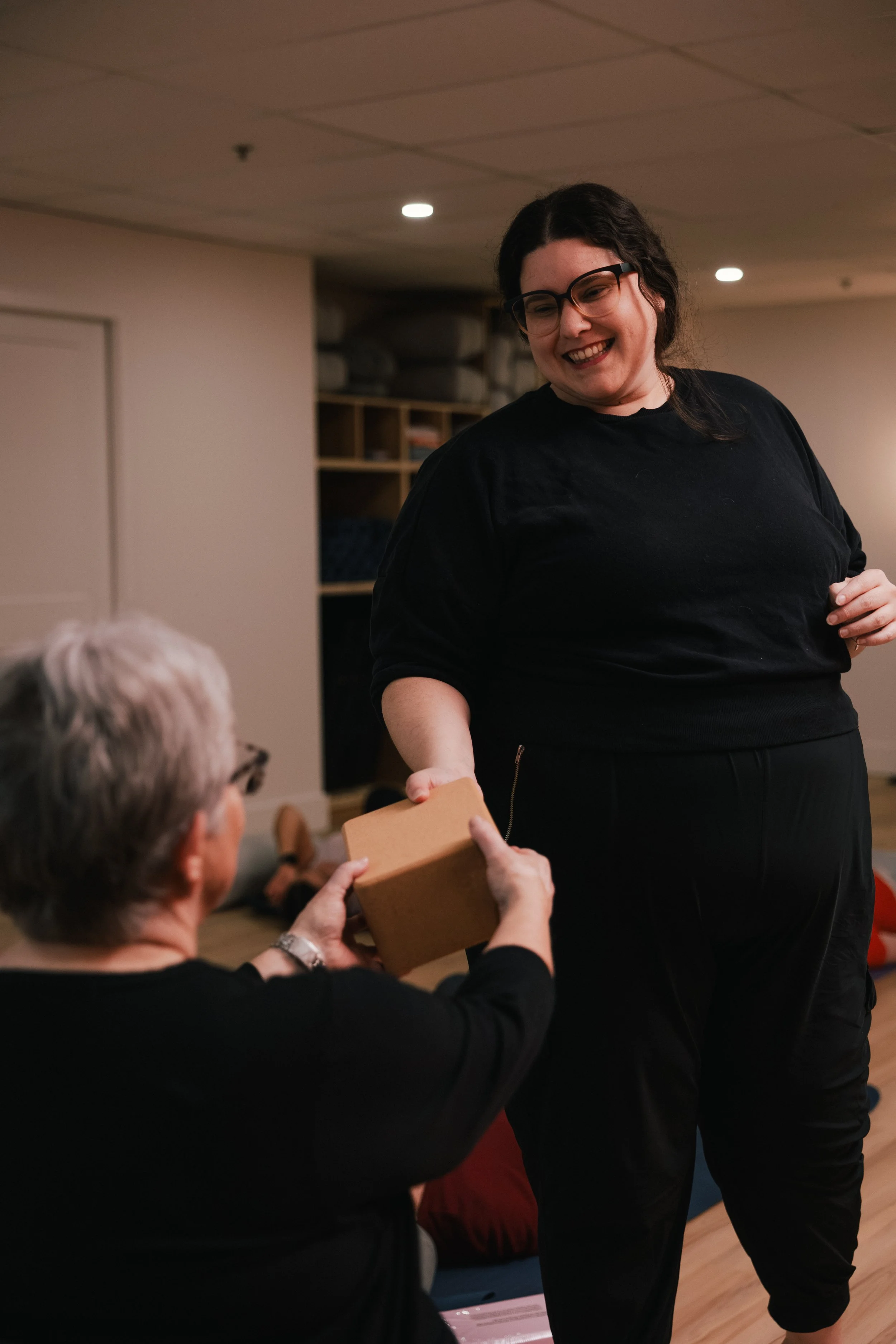
You do not need to be flexible, experienced with yoga, or able to get down onto the floor to participate.
Living with Parkinson’s can mean that movement, balance, strength, energy, sleep, stress, and confidence change over time.
Yoga therapy can offer a personalized, adaptable way to explore movement and relaxation in an accessible environment.
At Savage Yoga, Parkinson’s-focused yoga therapy is designed to meet you where you are. Practices can be adapted for standing, seated, or floor-based movement, and sessions can be modified around mobility, fatigue, balance, and individual needs.
Book a Parkinson's-focused yoga therapy session or contact Savage Yoga HERE to discuss whether this approach may be a good fit for you.
-
Research into exercise and movement-based practices for people with Parkinson’s suggests that physical activity can be an important part of managing symptoms and maintaining function. Yoga may complement other forms of movement and healthcare by providing opportunities to work with strength, mobility, balance, breathing, relaxation, and body awareness.
Depending on your individual needs and goals, yoga therapy may incorporate:
Gentle strength and mobility exercises
Balance and stability practices
Postural awareness
Movement coordination
Breath practices
Relaxation and nervous-system regulation
Mindfulness and body awareness
Seated and chair-based practices
Strategies for moving with greater confidence
Practices that support relaxation and sleep
Adaptations for fatigue and fluctuating energy
Restorative yoga and guided relaxation
The result isn't to force your body into traditional yoga poses. The goal is to find useful, sustainable ways of moving and regulating that fit you.
-
There isn't one standard Parkinson's yoga therapy session.
Your first appointment includes time to talk about your experience, your current movement abilities, what you're hoping to work on, and what kinds of practices feel comfortable and useful to you.
From there, we develop an individualized practice.
A session might include chair-based movement, gentle strengthening, balance work, breathing practices, yoga postures, relaxation, meditation, or restorative practices. Some sessions may involve more movement, while others may focus primarily on relaxation and nervous-system regulation.
Everything can be adapted.
You can practice sitting in a chair. You can use supports. You can take breaks. You can work at a slower pace.
There is no expectation that you need to keep up with anyone else.
-
Parkinson's looks different from person to person, and your needs may change over time.
Yoga therapy can be adapted for people who are:
Newly diagnosed
Living independently
Experiencing changes in balance or mobility
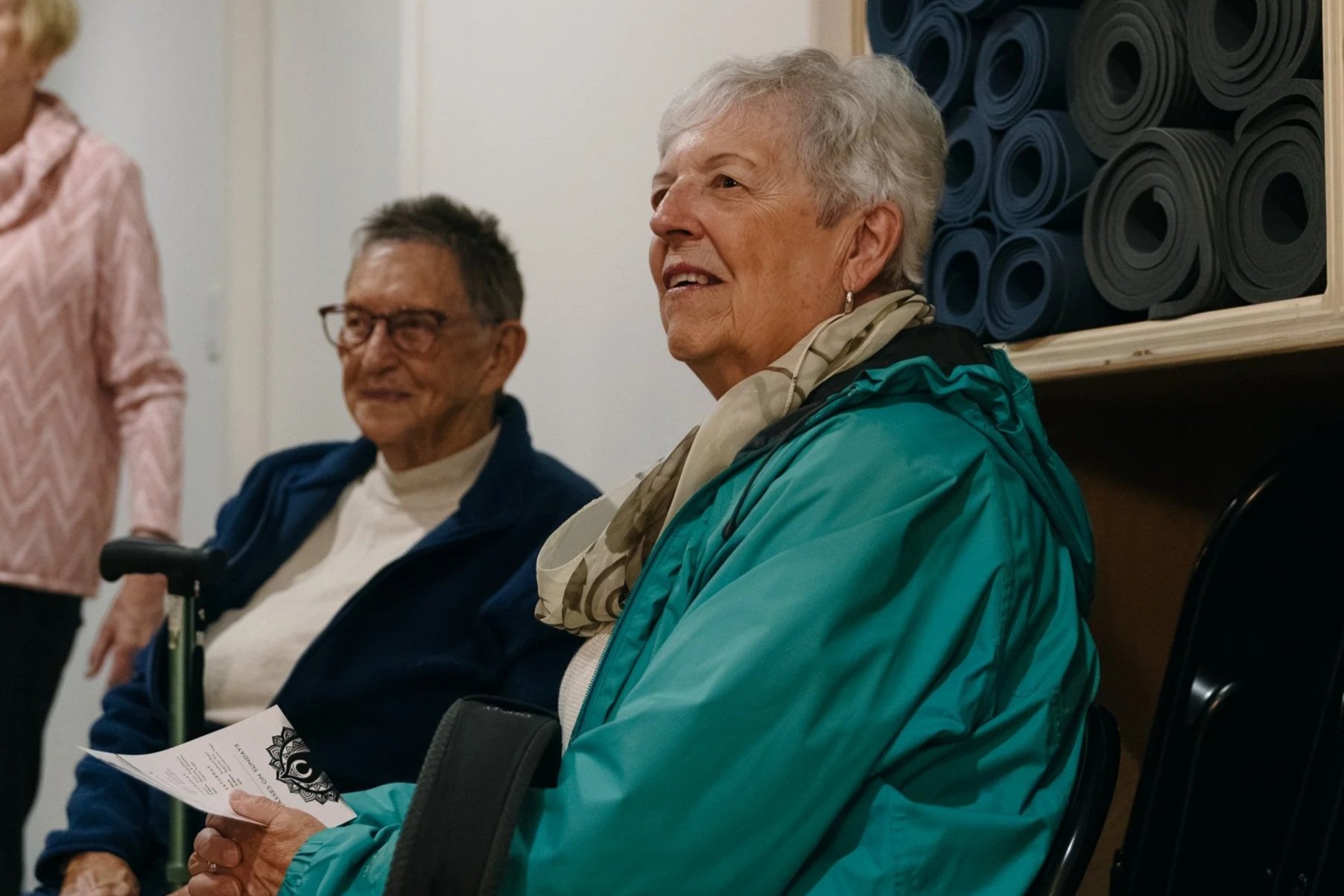
Using a cane, walker, or other mobility aid
More comfortable practicing from a chair
Experiencing stiffness or reduced range of motion
Managing fatigue
Looking for ways to maintain movement and confidence
Interested in relaxation, stress management, or restorative practices
Sessions can also be adapted as your needs change.
-
If you've never done yoga before, that's completely fine.
If you've tried yoga and found traditional classes inaccessible, uncomfortable, or intimidating, that's fine too.
Parkinson's yoga therapy isn't about touching your toes or holding a pose perfectly.
It's about finding movement and practices that are appropriate, useful, and sustainable for your body.
-
Savage Yoga was built around the idea that yoga should be accessible to more people—not just people who are young, flexible, mobile, or already comfortable in conventional yoga spaces.
As a yoga therapist, I take an individualized approach rather than teaching a one-size-fits-all sequence.
My work includes adapting practices for different bodies, abilities, mobility levels, and nervous systems, with an emphasis on creating an environment where you can participate without judgment or pressure.
I am also committed to continuing my education around Parkinson's and accessible movement practices and to connecting with the broader Parkinson's community.
-
Depending on what you're looking for, we may work on:
Movement & mobility
Exploring comfortable ways to move, strengthen, stretch, and maintain mobility.Balance & stability
Practicing movements and strategies that can support balance and confidence.Breath & relaxation
Using breath awareness, restorative practices, and relaxation techniques to help you settle and reconnect with your body.Body awareness
Developing greater awareness of posture, tension, movement patterns, and physical sensations.Confidence & independence
Finding practical movement strategies that can be incorporated into everyday life. -
Wear comfortable clothing that allows you to move.
You don't need to bring a yoga mat if you don't have one. Props and equipment can be provided, and sessions can be adapted to your mobility needs.
If you use a cane, walker, or other mobility aid, please bring it with you.
-
Do I need previous yoga experience?
No. Absolutely not.
Sessions are designed around your current abilities and experience.
What if I can't get onto the floor?
That's not a problem. Yoga therapy can be practiced entirely from a chair or standing position when appropriate.
Can I use my walker or cane during a session?
Yes. Mobility aids are welcome. They can also be incorporated into adaptations when appropriate.
Is yoga therapy a replacement for physiotherapy or medical care?
No. Yoga therapy is complementary to your existing healthcare and movement care. It does not replace medical treatment, physiotherapy, occupational therapy, or other care provided by your healthcare team.
Will yoga therapy cure Parkinson's disease?
No. Yoga therapy does not cure Parkinson's disease.
The purpose of this work is to provide individualized movement, breath, relaxation, and self-awareness practices that may support function, wellbeing, and quality of life alongside your existing care.
Do I need to have a specific Parkinson's symptom to benefit?
Not necessarily. Your goals might involve movement, balance, strength, relaxation, confidence, body awareness, or simply finding an enjoyable way to stay active.
We'll start with what matters to you.
A note about your healthcare
Yoga therapy is a complementary wellness and movement service and is not a substitute for medical diagnosis, treatment, physiotherapy, occupational therapy, or other healthcare.
If you have Parkinson's disease or another neurological condition, please discuss changes to your exercise or movement routine with your healthcare team when appropriate. Practices will be adapted to your individual abilities and circumstances.